Hotels
 Vacation rentals
 Brands and ad agencies
 Airlines
 Destinations
 Travel agencies
 Cruises
 Car rentals
 Financial institutions
 Activities

Check out the latest trends shaping travel to inform your strategies and connect with travelers.
What’s in this episode
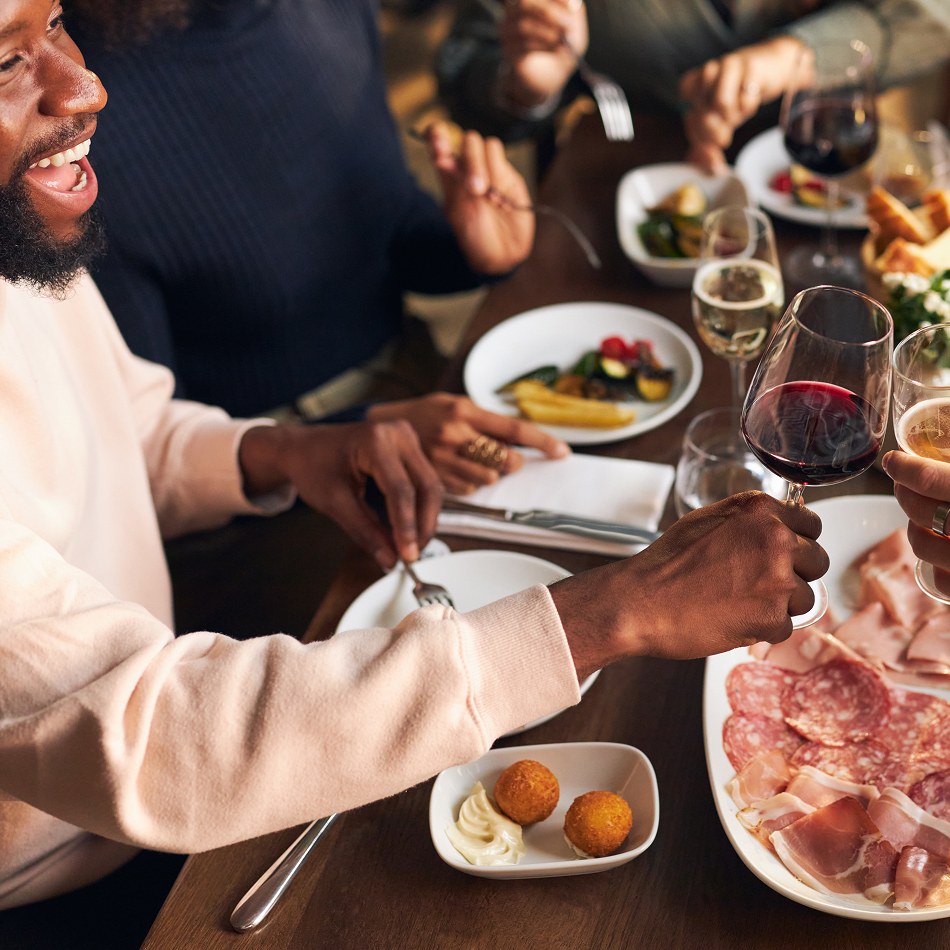
The meals we remember most aren’t just about flavor — they’re about where we are, who we’re with, and the sense of place on the plate.
In this episode, Chef Julian Hagood joins Elisabeth to explore how travel and food intertwine. Julian shares his journey from New York to Seattle, where he transformed an abandoned bodega into one of the city’s most beloved restaurants, Harry’s Fine Foods.
He reveals some of his favorite dishes inspired by the Pacific Northwest, rooted in seasonal and regional ingredients. Julian also talks about why collaboration with local farmers, fishers, and fellow chefs is the secret sauce behind his menus. It’s the small details that contribute to top-notch hospitality.
Listen to the full conversation to learn how he leverages his local ecosystem for an experience that’s bigger than the sum of its parts.
“If you are not tasting your food or sleeping on your pillows, then how do you know that they're good?”
Read the transcript
[00:01:42] Elisabeth Goodridge So, we have so many things to talk about, and we're gonna talk so much about food and travel. But let's get a little bit about your background. First off, where did you get the inspiration to become a chef in the first place?
[00:01:52] Chef Julian Hagood When I was 10, when we lived in Walnut Creek in the East Bay San Francisco, I told both my parents that I wanted to be a chef.
[00:02:00] Elisabeth Goodridge At 10.
[00:02:00] Chef Julian Hagood At 10, and I asked for a fry daddy and a salad shooter for my birthday, both of which I was given.
[00:02:06] Elisabeth Goodridge I love this.
[00:02:07] Chef Julian Hagood Which is cute, and they're like, yeah, cute. I'm sure he wants to be a chef. Yeah, I want to be an astronaut, I want to be a doctor, whatever. I mean, it held true, and here we are.
[00:02:15] Elisabeth Goodridge Here we are. Did they give you...did they give you birthday presents, like culinary based?
[00:02:19] Chef Julian Hagood Yeah, I would get knives every now and then as I progressed in my career.
[00:02:24] Elisabeth Goodridge That's awesome. And then you studied at the Premier Culinary Institute.
[00:02:27] Chef Julian Hagood Yep. In Hyde Park. And it was also when I was 10, I declared that I was gonna go to the CIA.
[00:02:31] Elisabeth Goodridge Oh my god.
[00:02:32] Chef Julian Hagood And they were, that's cute. I'm, yeah, I'm sure you will someday. But I graduated high school and off to the CIA. It was like Hogwarts for cooks. I mean, the campus is so beautiful.
[00:02:41] Elisabeth Goodridge Yeah, it is. I have...I ate there, it's delicious.
[00:02:44] Chef Julian Hagood Yeah, that old Jesuit monastery. And it's just like those crazy fresco. I mean, it's just food for days. Every three weeks a class graduates, and they do Grand Buffet, and it...there's torchons and foie gras and carving stations. I mean, it's like being at a medieval-like royalty buffet.
[00:02:58] Elisabeth Goodridge Like a feast.
[00:02:59] Chef Julian Hagood But it's like your class meal when you're in the classrooms, cause it's just, it's wild. It's incredible.
[00:03:04] Elisabeth Goodridge All right, your properties, which you have three. So, you have Harry's Guest House, which is an upscale, you don't want to use the word B&B, but it's a glorious being at home, but with the luxury, right? And then two restaurants, Harry's Beach House and Harry's Fine Foods. But those are all in Seattle.
[00:03:22] Chef Julian Hagood They are.
[00:03:22] Elisabeth Goodridge And we're recording this in Seattle. And I love this place, but I don't know Seattle very well. So, tell me how you got from Walnut Creek to California. You decided to establish your life and your businesses in Seattle. What drew you here?
[00:03:35] Chef Julian Hagood I moved to Seattle from New York, actually, after finishing culinary school and working in the Hudson Valley for a while. My brother was living here. I never really spent much time in Seattle.
[00:03:44] Elisabeth Goodridge Oh, okay, so it's new.
[00:03:45] Chef Julian Hagood Yeah, it was new, but it was before the major kind of tech renaissance of Amazon and all that stuff. So, it seemed relatively affordable at the time. And its Capitol Hill was still from a development perspective.
[00:03:58] Elisabeth Goodridge And that's where Fine Foods is. The first restaurant’s in California. Okay.
[00:04:01] Chef Julian Hagood Yep. And so I had met with a real estate broker, and I'd been working as a bartender and a chef and kind of doing a little moonlighting here and there, and met with a real estate broker, and she said, look at this abandoned bodega with the floor falling in and all this other stuff, and that became Harry's home.
[00:04:18] Elisabeth Goodridge You draw a lot of influence from the Pacific Northwest to your food and your restaurant.
[00:04:24] Chef Julian Hagood Sure.
[00:04:24] Elisabeth Goodridge So, what were the inspirations?
[00:04:25] Chef Julian Hagood There's, I mean, being growing up in California and knowing California, I mean, the growing season is so infinite. It's like you can have anything you want to, anytime. But I think to cook more mindfully and seasonally in Seattle, it's a little bit harder and a little bit more of a reach. But they're the bounty of, like, seafood here and makers from cheeses and, like, dairy products to all the shellfish farmers and everything. I mean, it's really an incredibly rich, rich place.
[00:04:55] Elisabeth Goodridge I have so many questions, because I feel like we could go so many places. We could go cheeses, we could go wine.
[00:05:00] Chef Julian Hagood I know when you say that, I'm like, wait, I'm like, I'm short circuiting. There's so many things.
[00:05:03] Elisabeth Goodridge So many things to try.
[00:05:04] Chef Julian Hagood We buy with the restaurants, we buy a lot from the Puget Sound Food Hub and Farm Stand Local. It's basically a wholesale enterprise way to buy from farmers' markets and small makers and purveyors instead of using FSA or like larger food service operation without having to physically, because I mean, as much as the fantasy of a chef is to go to the Santa Monica Farmers Market every Wednesday and shop for your restaurant when you're doing something on a larger scale but still want to be good stewards of the environment, have the freshest ingredients.
[00:05:34] Elisabeth Goodridge So, here's my question. How do you take all of those wonderful influences and the food and the wine and put it on a plate or in a glass?
[00:05:42] Chef Julian Hagood It's really a collaboration with all of the wonderful people that we work with. Restaurants are such intricate beings because they are so personality-driven and opinion-driven, both from the customer side and the staff side. It's passion. It's so much passion. Yeah. I didn't like this and I love this. And why? And what can we do better?
[00:06:02] Elisabeth Goodridge Right, exactly, exactly.
[00:06:04] Chef Julian Hagood Yeah. I mean, same with staying somewhere, too. So, I think the collaboration with our chefs and with our general managers and with our beverage directors at this point, being able to really sit down at a table with everybody, and talk, and bring in ingredients, and talk about menus, and talk about seasons, and talk about geoducks, for example, that you know what a geoduck is.
[00:06:27] Elisabeth Goodridge And my cousin and I are fascinated by them. We are so excited. In fact, we were sending photos of geoducks back and forth before my journey. Okay, can you educate our audience?
[00:06:36] Chef Julian Hagood So, geoducks are native clams to this region. They're usually a couple hundred feet offshore. But at low tide, you can go out, and their siphons are sticking up out of the ground. But they go for like 40, 50 bucks a pound, I think, wholesale. They're incredible. They have a super-rich clam flavor, and they have an incredible amount of meat. Comes out of the main clam. They're so big, yeah. So big. I think Taylor Shellfish in Seattle grows a ton of them, and most of them is exported to China, because China has such a big want for these. But anyways, boiled very quickly and sliced super thinly, they make an excellent crude with, like, really good texture. It tastes like, well, you're outside on that perfect-like ocean day.
[00:07:13] Elisabeth Goodridge Yeah. And it smells good.
[00:07:15] Chef Julian Hagood The most perfect whiff of like salt air, that's when you have, like, a slice of, like, freshly blanched geoduck. That's the essence of it. In our clam chowder at the beach house, we take geoduck meat, and it gets simmered and braised with cream and white wine and lemon and fennel. And then it's pureed. And so that's, like, the base for our chowder. So, it's not just, I mean, well, a lot of chowders I think are heavy on cream, and half of this has the essence of clam, like all the way through.
[00:07:43] Elisabeth Goodridge Real, real clam. Yeah. When I was at the beach house the other day, I did not get the clam chowder, but I did get the halibut.
[00:07:48] Chef Julian Hagood Don't sleep on the clam chowder. How is it?
[00:07:49] Elisabeth Goodridge Well, no, I'm now thinking like Sam, my producer, and I now have to go back because there was with first off, we were having a very hard time deciding what we wanted. And now we have to certainly go back and have the clam chowder. But walk me through it. Do you hear from your general manager, or do you hear from your seafood purveyor and say, I've got some halibut that is so good. And then you all put me in the room to decide how you make a dish that represents the Pacific Northwest.
[00:08:11] Chef Julian Hagood These are all like on, we're all on, like, text message together with the chefs from both restaurants. We'll get a text from our guys at Key City Fish, and they'll be like, hey, got halibut coming in next week. Are you guys ready for it? And so a lot of the times we will go to the market and buy halibut just to start cooking and thinking about it, and we'll start a thread. Hey.
[00:08:28] Elisabeth Goodridge So, you're prepping before even.
[00:08:29] Chef Julian Hagood Exactly.
[00:08:30] Elisabeth Goodridge Is in the restaurant.
[00:08:31] Chef Julian Hagood So, like the farro under the halibut.
[00:08:32] Elisabeth Goodridge Which was delicious.
[00:08:34] Chef Julian Hagood Grown in eastern Washington. So, you have the springs. Do you have this gorgeous asparagus, which is local in a few ways? You have an onion soubise, which is on the bottom to give a little bit of creaminess, a little richness, and then the faro coat from bluebird grains in Winthrop, Washington.
[00:08:48] Elisabeth Goodridge So, again, super local.
[00:08:50] Chef Julian Hagood Virtually everything, I think, minus the olive oil and the lemon on that plate is local. So, we talk about it and then put it together. We do a tasting, we'll all sit down together and usually end up drinking wine at the same time.
[00:09:01] Elisabeth Goodridge Life is hard.
[00:09:02] Chef Julian Hagood Yeah, totally. But then and then someone will have this needs more acid, this needs pickles. I wouldn't cook this in this way.
[00:09:08] Elisabeth Goodridge But it's a collaborative.
[00:09:09] Chef Julian Hagood It's a collab, it's a collaboration. Exactly. That's really where the beauty. I mean, at the end of the day, I think our, we have the final say, obviously, as to what we do, but it's not fun to do...it's so much more fun to work with people who are passionate about this. I completely agree. And who excel at this and let them fly.
[00:09:25] Elisabeth Goodridge So, do you think you're taking those lessons, you know, how collaboration is key to elevate your experience to your guest house? I mean, you're a chef, and then you went into hospitality. Tell me, were there some hard learning lessons, were there some growing pains?
[00:09:40] Chef Julian Hagood No, actually it's funny. I think running a property is or from a hospitality standpoint, like a guest house is actually easier than running a restaurant. You're still managing your guests' expectations and communicating.
[00:09:52] Elisabeth Goodridge Yeah, more touch points.
[00:09:53] Chef Julian Hagood But there's more touch points. There are, but it's almost less at certain point, because I think it is so dialed at this point. It's okay, the pillows are not going to be overcooked. We've spent so many nights sleeping in there and messing with everything. You realize, oh, this light is too bright. It's in my...we should really angle this way, or the water pressure, let's take out the pressure, the water pressure things in the shower head so you can have an enjoyable, luxurious shower. I think really turning over every glass and every opening, every cupboard, and living in the space allows you to really, not everyone's gonna, but I have to say, I think we only have five stars at this point on Google.
[00:10:26] Elisabeth Goodridge Oh, five stars.
[00:10:27] Chef Julian Hagood Yeah. Across the board.
[00:10:29] Elisabeth Goodridge Okay, but what I'm hearing you say is what it's, number one, it's collaboration, but two, you are putting yourself in that actual spot of the guest, whether or not they're in the restaurant or whether or not they're booking that room. And you're doing that and trying that and practicing. So, you're actually putting yourself there.
[00:10:44] Chef Julian Hagood Absolutely. And I think the same when I'm working in the kitchens and working service, I will also, I'll order things for a table, even though it's not for that table. And I'll dash around the corner and eat it real quickly just to, or if the cooks are putting sips, I'll walk back on the line and taste things. I think as most good chefs do, I think you, if you're not tasting your food or sleeping on your pillows, then how do you know that they're good? And when you do that, I think beer managers and your other folks see it, and I think it just becomes part of the culture.
[00:11:11] Elisabeth Goodridge Got it. So, what hasn't worked? Anything?
[00:11:14] Chef Julian Hagood We had to rent a couple of parking spaces across the way 'cause we're like, oh, we have this place on Capitol Hill. We did take away the driveway and make a beautiful garden, which makes sense.
[00:11:24] Elisabeth Goodridge And you're growing food there, I bet.
[00:11:24] Chef Julian Hagood There's a lot of herbaceous stuff out there, but it is largely ornamental. But it is between the restaurant and the guest house, and a lot of people do weddings and have photo shoots out there. It's really pretty. But we took away the parking and a lot of people were like, wait, I need to place parked car. So, that was a pretty easy solve.
[00:11:39] Elisabeth Goodridge But what I'm also hearing is details. You're not just focusing on what's happening inside in either of these properties, but you're also looking at the esthetics on the outside. Did you hire someone to do the garden?
[00:11:50] Chef Julian Hagood We did, we chose the palette of the plants we want, and, but Jake, my husband and I, we work together and are raising a five-month-old together. So, we have lots of...
[00:11:59] Elisabeth Goodridge Oh, congratulations.
[00:11:59] Chef Julian Hagood Thank you. Yeah. So, we have lots of jobs together. We're good business partners.
[00:12:03] Elisabeth Goodridge Okay, so tell me about this collaboration, because a lot of people in the travel industry are small B and B owners, or they have a restaurant and it's a family business. So, how did you guys decide to get into business together, and what kind of lessons could other people learn?
[00:12:17] Chef Julian Hagood Sure. I'd started both these restaurants on my own. And I met Jake in 2020. And during kind of the end of the pandemic, I'd been running these restaurants for, first one for almost 10 years. And it's kind of like, okay, I think I'm cool on this one. I was going to sell it to some folks who are working for me. And Jake walked in there and was like, oh my God, this is such a beautiful space. You cannot sell this. Which, like, helped me see it through new eyes and helped breathe life into it. I am not a numbers person or a business person. I'm very much a creative person and a people person. There's not a face that I will forget walking through our door, which I think is a superpower. Names can be fuzzy, but recognizing faces. Yeah. Always. So, he quit his job at Apple and took a leap. And now we're playing restaurant together. And it's, and it is, I have to say, it is there are days that are trying when we're with each other all day.
[00:13:08] Elisabeth Goodridge Of course.
[00:13:09] Chef Julian Hagood And we have to remember when to be husbands, when to be parents, and when to be restaurateurs.
[00:13:13] Elisabeth Goodridge And do you take a step away, do you say, okay, I'm gonna focus on this or he lets you do the creative stuff and he does?
[00:13:18] Chef Julian Hagood Oh, very much so.
[00:13:19] Elisabeth Goodridge Okay. Yeah. So, everyone should have like their own...
[00:13:22] Chef Julian Hagood Yeah.
[00:13:23] Elisabeth Goodridge So, you're raising a child, you've got all these properties that must sometimes feel like children.
[00:13:29] Chef Julian Hagood It does. We have, I think in the summertime at height we have roughly 110 employees, and people like, oh my god, you have a child, is it so hard? And I'm like, no, we already have 110 employees.
[00:13:38] Elisabeth Goodridge How do you find a good employee?
[00:13:40] Chef Julian Hagood Again, back to the collaboration thing. We will be the first to interview if they're on a managerial scale. But I think really getting everyone's vote in from the team, because ultimately, we're all working together. And it has some of our best folks have just been references from folks that we really enjoy working with now. So, I mean, I've just, like, everyone's tale as old as time, immediately post-COVID was a really tough market.
[00:14:03] Elisabeth Goodridge Of course.
[00:14:04] Chef Julian Hagood It's funny, it's like when you think about working in other places, there's as many people in the Bay Area as there are in the state of Washington.
[00:14:12] Elisabeth Goodridge Whoa, I did not know that.
[00:14:13] Chef Julian Hagood You're like, oh, Seattle is this huge place. We joke oftentimes that it is just a small fishing village because it kind of, it presents as a city, but it like, but there's not, there's like I said, there's more people in the Bay Area than there is in the entire state of Washington.
[00:14:27] Elisabeth Goodridge People know Seattle for these tech companies. But they know Seattle, and then once you get here, it's this cute, quaint fishing village.
[00:14:33] Chef Julian Hagood Beautiful. It's emerald. Like right now, literally it is the Emerald City. Yesterday with those, like, balloon clouds. It's stunning. It's a really beautiful place.
[00:14:40] Elisabeth Goodridge So, you mentioned a little bit about COVID, and I can't imagine what Seattle was like, because it relies on a lot of people visiting and travel. But right now, we're seeing in Seattle and across the board this restaurant renaissance. Do you know why? Do you have any ideas on why food is becoming so important for travel these days?
[00:15:00] Chef Julian Hagood I think, because of the people that have moved here for a lot of these tech companies and other companies and for weather and other reasons, it's, Seattle's a relatively benign place to live from a disaster standpoint. There's just a lot more people moving through here and a lot more creativity. And with those people supporting the infrastructure of places like the food hub and all these other farmers, they're able to grow more and do cooler things and make it work on a larger web sort of system for everybody, which I really like.
[00:15:27] Elisabeth Goodridge And I love that you keep talking about collaboration and working with folks and then also figuring out operational processes that work for you. You can't just go to that farmer's market, but you can still find those experts. Okay, a couple easy questions. Where have you traveled to last? And I know you've got a 5-month-old, so you perhaps haven't gone far.
[00:15:46] Chef Julian Hagood I haven't gone too far with her. Sun Valley was the last place we traveled to.
[00:15:52] Elisabeth Goodridge And then this is my exotic follow-up question. But you know what I say, everyone deserves to travel. And you can take a trip that will put you in a whole different place, but you can still sleep in your bed. So, it's all about how your mindset is with travel.
[00:16:06] Chef Julian Hagood We just got our 5-month-old, we just got her passport photo last week, so, and I just got the email yesterday that they're getting, so...
[00:16:11] Elisabeth Goodridge Okay, so once she gets the passport, where are you guys gonna go?
[00:16:13] Chef Julian Hagood I think we are going to Italy this fall.
[00:16:16] Elisabeth Goodridge Great.
[00:16:16] Chef Julian Hagood For a friend's birthday.
[00:16:17] Elisabeth Goodridge That's so fun.
[00:16:18] Chef Julian Hagood Right along with it.
[00:16:18] Elisabeth Goodridge And yeah, my father used to say, one child, you can just throw them on your back. It's two when the house explodes. But okay, we're in Italy and what do you plan on eating?
[00:16:27] Chef Julian Hagood We are gonna go to Veneto. I think we have friends that have a place in the countryside up there and pasta always.
[00:16:35] Elisabeth Goodridge Pasta always. Pasta always. All right. Last question. When you check in, I'm asking this of everybody. When you check in to your destination, whether or not it's Italy or Sun Valley or anywhere else you travel, what is the very first thing you do?
[00:16:48] Chef Julian Hagood Lay on the bed and water pressure.
[00:16:50] Elisabeth Goodridge Okay. That's two, so the two most important things for you. Yeah, that makes sense.
[00:16:54] Chef Julian Hagood Sleep, sleep is, I think I'm Princess and the Pea when it comes to sleeping. Or how much wine do I have to drink if I sleep well, too?
[00:17:02] Elisabeth Goodridge Julian, thank you so much for coming and speaking to Powering Travel. I really appreciate.
[00:17:07] Chef Julian Hagood It's been a joy.
[00:17:08] Elisabeth Goodridge Made me laugh so much. Best of luck with everything.
[00:17:10] Chef Julian Hagood Come visit us at Harry's.
[00:17:11] Elisabeth Goodridge Oh, again. I'm coming back.
[00:17:14] Chef Julian Hagood My pleasure. Thank you.
[00:17:16] Elisabeth Goodridge If you want to know more about food and travel trends that are happening currently, go to the link in the description and follow along with us as we talk to more guests and learn more about the business of travel throughout this season. Again, a huge thanks to Chef Julian Hagood for sharing such wonderful insight with us. And thank you for listening to the Powering Travel podcast, brought to you by Expedia Group. I'm your host, Elisabeth Goodridge, and I can't wait to see where you go to next.
Meet the experts
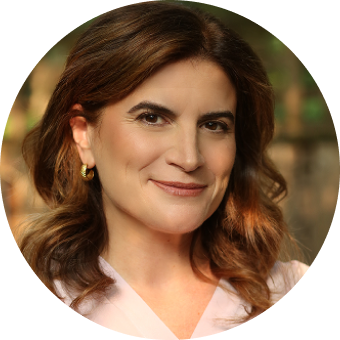
Elisabeth Goodridge
Director, Content Editor & Writer
Elisabeth, who worked for decades as an editor and journalist, now leads partner storytelling at Expedia Group as a Director, Content Editor & Writer. Formerly with The New York Times, the Boston Globe, and other news organizations, she brings years of award-winning expertise in travel coverage and audience-first content.
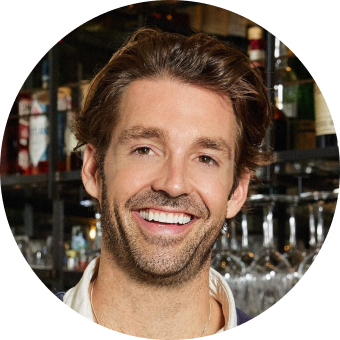
Julian Hagood
Chef and owner of Harry’s Good Times Co.
Julian has over 20 years of experience in restaurants, catering, and culinary storytelling. A graduate of the Culinary Institute of America, Julian honed his craft in Michelin-starred kitchens. Today, he owns and runs Harry's Good Times Co., a hospitality group rooted in seasonal cuisine and warm, inclusive hospitality.
Where to listen





Was this page helpful?
Tell us how we did so we can improve our site.