Hotels
 Vacation rentals
 Brands and ad agencies
 Airlines
 Destinations
 Travel agencies
 Cruises
 Car rentals
 Financial institutions
 Activities
Discover why travelers use advisors, what support they seek, what makes them loyal, and what they value most.
What’s in this episode
Travel rewards those who remain curious and immerse themselves in the local culture. For longtime host of “The Amazing Race” Phil Keoghan, missing those opportunities means missing the entire point of the journey.
In this episode, he joins Elisabeth for an inspired conversation about the lessons he’s learned from a lifetime of travel. He reflects on his earliest memories abroad and how this exposure to diverse cultures shaped his worldview. Phil credits curiosity as the greatest gift he received from his parents, one that continues to fuel his approach to life.
He shares personal stories from the road, along with reflections on hosting over 37 seasons of television. From inspiring viewers to explore the world to showing the best of humanity on screen, he talks about how the show has encouraged millions to step outside their comfort zone. Finally, Phil speaks to the magic that exists beyond group tours and why the moments when things go “wrong” often become the most meaningful memories.
Check out the full interview to learn how to create authentic, unscripted travel moments nobody can forget.
“If you're looking for the real difference in travel, and you want something authentic, you've gotta make a little bit of effort to make those things happen.”
Read the transcript
[00:00:45] Elisabeth Goodridge You've been on The Amazing Race for 37 seasons, coming up to 38. But you've been traveling since you were a kid. In fact, I think you lived all over the world before you were even 10. Could you tell me a little bit about your world travel as a child?
[00:00:59] Phil Keoghan My parents grew up in a very small town in New Zealand. And the South Island on the West Coast is quite a remote place. After my dad finished his doctorate in agronomy, which is a plant science, he was offered a position to go to Canada. He decided that it would be a great opportunity. My sister and I were two and three. And we lived in Guelph in Canada for a number of years. And while we were there, my parents were really into exploring America. So, we did a lot of trips in a Volkswagen van. A Westfalia-fitted Volkswagen with the ones with the pop-up roof. And they took a sabbatical at one point. And for nine weeks, we drove all across North America. My dad's goal was to go to every national park in North America, and so we got to the Grand Canyon and Yellowstone and a lot of Yosemite and all the smaller parks in between. And my sister and I just absolutely fell in love with adventure and travel. And we looked forward to those adventures. I remember once a bear came and disturbed us in the middle of the night.
[00:02:05] Elisabeth Goodridge Oh my God. Could there be anything more exciting for you?
[00:02:06] Phil Keoghan Oh, it's so exciting when you're a kid. Mom and dad had to pull the roof down so we're inside the vehicle. They really instilled in us the sense of exploration. And through them, we got to see how my parents interacted with people and how they connected with people. And I think that's where my love of connecting with people came from. My mom and dad got an offer to go down to the Caribbean, to an island called Antigua. I absolutely loved growing up in Antigua. I was in the water most days. I learned how to snorkel, how to catch a fish. And while we were there, my parents did a lot of travel to the other islands, St. Lucia, Barbados, Nevis, St. Kitts, Anguilla, Trinidad, and Tobago, Jamaica. My dad actually got a short stint in Colombia. We lived in Cali for a little while. So, all of that travel just got me more and more hungry for more and travel.
[00:03:08] Elisabeth Goodridge How would you get comfortable in all these different cultures?
[00:03:12] Phil Keoghan Just my parents had such an ease with people. There were all sorts of people always in and out of our house. And I got to see how at ease they were with connecting with anybody in any situation. One day my dad would be talking to the prime minister. My mom would have music students who were Rastafarian in a reggae band. And that obviously rubbed off on my sister and I. I think if there was one key thing that we got from our parents, it was curiosity, to be curious, to ask questions.
[00:03:49] Elisabeth Goodridge Also, it's so fun when you meet new people to learn all about them.
[00:03:53] Phil Keoghan Curiosity to me is the best thing, and to me it's the best thing about travel, working on Amazing Race, going around the world. I'm always asking whoever I'm working with, where do you drink coffee? Where's your coffee place? I don't want to have coffee in the hotel. I want to go to where they have coffee. Where do you go for lunch? Let's go there. I remember this really surreal experience I had once. When we were in Egypt and we were at the foot of the Sphinx and we had the pit stop there, and the teams were running in, and the guys who were running the jib, they were like, hey, we're going to order some food. Do you want something? And I'm figuring that they're going to order from Egyptian delicacy.
[00:04:33] Elisabeth Goodridge Right, of course.
[00:04:33] Phil Keoghan And next thing, Domino's delivery turns up. We're eating Domino pizza at the foot of the Sphinx under the shadow of the pyramids. And like, okay, don't knock it. This is one of those moments, I guess, that you just kind of like take it all in and go. I didn't see this coming.
[00:04:52] Elisabeth Goodridge I can so see that, the brightly colored box. And then you've got this ornate, amazing.
[00:04:57] Phil Keoghan Yes.
[00:04:58] Elisabeth Goodridge Man-made wonder.
[00:04:58] Phil Keoghan But these crazy things happen. I remember once we slept up on the trees, 90 feet up in the trees in Costa Rica, like a tree house. But the next morning, I can smell like fresh coffee. And next thing I hear this guy making this howling sound coming through the trees on the wire with fresh Costa Rican coffee. And he brought it in to us. And that was the first thing that I woke up to. This is like mind-blowing. Like, I love this.
[00:05:29] Elisabeth Goodridge I actually was holding my breath because that story was so vivid, what you just described. And also, I love coffee. And the idea of being in Costa Rica, having this freshly grown, freshly ground.
[00:05:40] Phil Keoghan Yes.
[00:05:41] Elisabeth Goodridge Wow.
[00:05:41] Phil Keoghan Yeah, and those are the moments that you realize why it is so important to get out of your regular environment.
[00:05:50] Elisabeth Goodridge Transformational.
[00:05:51] Phil Keoghan It is transformational. Now, that was much more in line than the Domino's pizzas in Egypt, right? Like what you would expect in Costa Rica. I always say to people, when you travel, you have to realize it's like going into somebody else's house. You have to be very respectful of their ways. If you are just accepting of difference, if you go to a place where they feel like you should have your shoulders covered, just cover your shoulders. What's the big deal?
[00:06:18] Elisabeth Goodridge And then ask some questions on why this tradition came to be.
[00:06:21] Phil Keoghan Yes.
[00:06:21] Elisabeth Goodridge Because then they'll understand that you value what is happening in their world.
[00:06:25] Phil Keoghan Right. And particularly right now, I feel like in the world, the more that we can connect in the world, the more accepting we'll be of difference. We don't have to agree on everything. But at least it's sort of like, okay, I have my opinion, you have your opinion. But it doesn't mean we can't have a civil conversation about those points of difference. You might worship somebody different or vote for somebody differently, but at the end of the day, there's certain things we have in common. There's certain ways that we can connect without necessarily having to agree on everything. And that's all fine. So, I feel like, yeah, particularly right now, for us to connect, it does make us more accepting at home.
[00:07:11] Elisabeth Goodridge You have to have a mindset to say, I might be going to a different place that might feel unfamiliar, but I'm going to find one or two things at least to bond with whoever and go from there.
[00:07:22] Phil Keoghan Yeah, and I feel like the important thing that we do on Amazing Race, which is unique, is most of the time when people who are not traveled see the rest of the world, it's when they see it in the news. And news is about "if it bleeds, it leads." So, most of time that people who haven't traveled have seen the rest the world, it's when things are going wrong. There is civil unrest. There's a big storm. There's pollution. There's protests. There's things that are bleeding that are then going to lead the news. And then people go, well, I don't want to go there because look at what's going on there. If the rest of the world only saw the negative things that were going on in America, they would think the same thing about America. But we know there's lots of good things in America.
[00:08:11] Elisabeth Goodridge Oh, many good things.
[00:08:12] Phil Keoghan So, I feel like on Amazing Race, instead of us zeroing in on what's wrong, we zero in on what's right. We zero in on the best in humanity. We zero in on the best places in the world, and why you should go there, and why it would be great to leave the comfort of your home and to travel. And people are surprised a lot of times. In their heads, they think it's so dangerous to go to these different places. And then I remind them that America is not the safest place in the world. There are other countries that are on paper safer, and yet America is a safe place relatively. So, yeah, I just feel like we've encouraged so many people to travel. Like, let me show you this. Yesterday, I'm on the plane yesterday.
[00:09:01] Elisabeth Goodridge All right, so folks who are listening, he's holding up a piece of paper from an airline.
[00:09:08] Phil Keoghan And Delta, I got to give a little call-out to Delta because I feel like Delta has stepped up. They're really making an effort with their customers.
[00:09:14] Elisabeth Goodridge Really good technology, too.
[00:09:15] Phil Keoghan Yes, very good. So, I get this note from Casey. She says she's a Boston-based flight attendant. I was traveling with my wife, and she says, thank you, Mr. and Mrs. Keoghan, for flying with us. As someone who grew up watching The Amazing Race with my parents, it's one of the things that inspired me to pursue the job that I have so I can travel the world. So, it's truly a pleasure to have you both on board today on one of your many travels. I hope you enjoy your flight, and thanks again for choosing Delta. And then she gives me the little wings to go with it, but it means so much to me when people come up to me and say that they were inspired. There's a thing online now, hashtag #FollowPhiliminator, and people will go around the world taking photographs of themselves in locations that I've done standups for Amazing Race in. And I just love that. I'm like, you were inspired to go there because you saw it on the show.
[00:10:10] Elisabeth Goodridge You're telling a good story as opposed to it bleeds, it leads.
[00:10:13] Phil Keoghan Thank you. Yes, exactly.
[00:10:14] Elisabeth Goodridge Also, what I'm hearing is gratitude.
[00:10:17] Phil Keoghan Very. I get paid to do something that I would pay to do. In my whole career, I've been lucky enough to travel, and I do feel that it is a privilege that I get to do what I get to do to share something positive.
[00:10:32] Elisabeth Goodridge You had said once on a podcast I listened to that there's nothing like a really good story. Humans are programmed to want to hear a really good story, a good joke, a good aside. I want to connect. Okay, you do these stories so well, but how can we apply that to travel? How could a tour operator kind of tell their destinations to guests in a really great story?
[00:10:52] Phil Keoghan Well, I think it's about reaching out and saying yes. It's about getting off the beaten path and treading down the unbeaten path. Like, it's about veering off the road a little bit, and looking for new and different opportunities. And that comes from connecting with local people and getting an understanding of their world. But in order to do that, you have to reach out. You've got to connect with people at their level. But I think if you're looking for the real difference in travel and you want something authentic, yeah, you've got to make a little bit of effort to make those things happen. You've got to create the opportunity. And the opportunity comes from doing a little bit of research, but then also like talking to people, getting outside of the resort, outside the bubble. So, I just try to encourage people to do something that's unique. Recently, I actually retraced my family history. So, I went back to the first Keoghan to arrive in New Zealand. And so I used that history as the breadcrumbs, if you like, to then venture and discover this is the farm where they were. This is where they settled. These are the mountains they went over. This is where my family lived in this place. And there were roads named after my relatives. I found two Keoghan roads. There's actually more, but I found a couple of Keoghan roads, and then people who knew my grandfather and spoke to them. And so it was a great way of discovering more about myself, but I also didn't know where those breadcrumbs were going to lead me. That was exciting because it was like, you're an explorer, right? As opposed to on Tuesday at nine o'clock, everybody get on the bus, and we're going to this place and then we'll do this and then we'll that like having a strict itinerary. Again, if people want to do it that way, that's fine. But if you're looking for something that's different, then you got to freelance it.
[00:12:54] Elisabeth Goodridge You said that the world's gotten a lot smaller since the inception of the Amazing Race. Smaller and more connected. What do you think destinations and hotels can do to make sure the guests are actually getting away from it all?
[00:13:06] Phil Keoghan Well, I think you have to make a conscious effort to disconnect. One of my best friends, Scott Shelley, he's a camera operator that my wife and I have worked with since 1992, actually. I was literally just on the phone with him the other day, and he'd got back from a motorbike trip. That's how he met his wife. He was, he loves Moto Guzzi motorbikes. He was part of a Moto Guzzi motorbike club, and he saw this woman who had this beautiful Moto Guzzi that was nicer than his. So, he struck up a conversation with her. Anyway, long story short, they got two kids. But he just, they went on a trip together because they got distracted with kids for a number of years, and then they decided, you know what, let's pull out the old Moto Guzzis. Let's go back and do it like we did when we were younger. And they went on this trip, and he said they were so inspired from this trip. He said, you know what, we realized that there was something missing, and we didn't know what it was, but it was that when we used to travel, we didn't have any technology. We had old-school maps, and we would put the old-school maps on the tank of our motorbikes and figure it out. Like we had to, like, it was like...
[00:14:12] Elisabeth Goodridge So, it's problem solving.
[00:14:15] Phil Keoghan Problem solving. Stopping at intersections. And it forces you to connect with people because you've got to go into the gas station. Hey, I'm trying to get this going. So, and the map says this. And so he said, literally our next trip is we're throwing away the technology, and we're going old school back to maps.
[00:14:30] Elisabeth Goodridge I love it.
[00:14:31] Phil Keoghan So, I do think you have to make an effort. Also, a lot of younger people, too, are embracing the idea of locking the phone away and disconnecting. With travel, so many people are about getting the Instagram shot, that they're not actually in that place and immersing themselves in that place because it's all about getting the picture of being in the place.
[00:14:57] Elisabeth Goodridge As opposed to communicating.
[00:14:58] Phil Keoghan As opposed to being in there. So, I feel like there's going to be a resurgence, or I think a lot of travelers are going to want to get back to old school, immerse yourself and take in the moment with the person you're with, rather than worrying so much about being in your phone.
[00:15:16] Elisabeth Goodridge So, how can hotels or tour guides, how can they help people get away from their phone?
[00:15:22] Phil Keoghan Filter out all the things that they don't want and to zero in on the things that they do want. To answer your question, it's to provide choice. It's to say, hey, would you like to get away from it all? Have you been stuck to your phone and your computer and your office, inside office for too long and you just feel like letting it all go, and disconnecting for a while? This is the trip for you. So, it's about providing options, where people have the choice to disconnect.
[00:15:54] Elisabeth Goodridge I've got an easy question. What separates a good travel experience from a great travel experience for you?
[00:15:59] Phil Keoghan When things go wrong, I would say.
[00:16:01] Elisabeth Goodridge Okay, so give me a fail.
[00:16:04] Phil Keoghan If you think about it, when you're sitting around at a dinner table, and you're talking about great experiences, travel experiences, very rarely do people sit there and say, well, we went on this trip, and every single day it was 75 degrees and the sun was perfect. And oh, my goodness, the meals, they were exquisite, and the room, it was just so amazing. And you just talk about everything that was right. Generally speaking, the stories that make it to the table over a few glasses of wine and a nice meal are, oh, my God, you won't believe what happened to us. We went to St. Lucia. Now we knew it was hurricane season, but we thought, no, we'll be able to slip in just before. So, the first three days, perfect. The fourth day, it was like the sky went black. This hurricane rolls in. We were like, what? And now we're stuck there, and they said that the flights are delayed. We find ourselves in the bar at the hotel, lying on the ground, and we meet these people, oh, great people. As a matter of fact, they've become lifelong friends, and their daughter, Jill, we're going to her wedding in San Diego. You talk about the stuff that went wrong. So, how do you create these moments to happen? I don't know about saying that you want to go out there and have things go wrong, but moments, how do you create memorable moments? You have to put yourself out there for these things to happen. So, I just encourage people to, again, to veer off the beaten path, and just to try something a little different.
[00:17:36] Elisabeth Goodridge You had mentioned that you were just touched by how many fans of The Amazing Race were traveling or were inspired to go to various different places because of your show. Have you ever been inspired by a television show or a movie to make a trip?
[00:17:51] Phil Keoghan Well, I really miss Anthony Bourdain's show. I love the way that he kind of opened your eyes up to seeing a place in a different way. He had a way of traveling and a curiosity that I found hugely inspirational. But going back to the old David Attenborough days, when he would travel the world, he made me want to go places and see things. Inspirational work that she did, traveling with purpose. She was a real maverick. I've always loved people who just think a little bit differently. And she was definitely one of those people and who strive to do some good in the world. Cousteau, of course, I remember all the old adventures of Cousteau. I think I would have enjoyed being born as an explorer. Like a couple hundred years ago, I think, I would've been somebody who wanted to go explore the world.
[00:18:48] Elisabeth Goodridge I think you're doing a pretty good job now, though, in terms of exploring the world.
[00:18:51] Phil Keoghan Yeah, I'm trying.
[00:18:53] Elisabeth Goodridge But I do. I feel like meeting smart people is priceless. And having a conversation and then learning. Having a conversation you've never had before. Oh, God, there's nothing better.
[00:19:02] Phil Keoghan And finding yourself in really bizarre, crazy situations. Like, I remember The Amazing Race. I got permission to go down and shoot where the terracotta warriors were in the pit.
[00:19:14] Elisabeth Goodridge Very cool.
[00:19:15] Phil Keoghan They said the last person they had allowed to go down there was President Clinton. And I'm like, oh, my goodness. And I was so paranoid being down there because they're all lined up, all the soldiers. Well, I was nervous because we had this Steadicam down there, and there was a minder with us. But I just had this terrible thought, like, what would happen if the cameraman accidentally bumped one of the terracotta warriors? And then it was like a domino effect. And we were all just standing there, like, watching this. And I have to say, I had this, like, just a little thing in my head that was like, go on, just push it, and see what happens. It was like one of those moments. I didn't do it, obviously, because it would have made world news.
[00:19:56] Elisabeth Goodridge Of course.
[00:19:57] Phil Keoghan I probably wouldn't be hosting The Amazing Race anymore. So, I didn't do that. But it went through my mind, I'll be honest with you.
[00:20:02] Elisabeth Goodridge All right. Very last question. And this is an easy one. And I'm asking this of all of my guests.
[00:20:06] Phil Keoghan Yes.
[00:20:07] Elisabeth Goodridge Very first thing when you check into a hotel or a rental, what is the very first thing you do?
[00:20:13] Phil Keoghan Well, the very first thing I do is look at the back of the door to see where the fire plan is.
[00:20:19] Elisabeth Goodridge Actually very, very smart.
[00:20:20] Phil Keoghan Literally the first thing I open the door, and I close it, and then I look at the floor plan. Because I've been in hotels before when there's been an earthquake or a fire alarm. Generally, I asked to be booked in a room that is below the seventh floor because the fire truck ladders can only go up to the seventh floor, so I don't like to be too high up.
[00:20:39] Elisabeth Goodridge Thank you so much for talking with us. I could talk to you for such a long time. And that's a wrap on today's episode of the Powering Travel Podcast. Big thanks to Phil for sharing his insights and stories from a lifetime of global travel. It's amazing. His perspective on connection and curiosity and getting out of your comfort zone gives us a lot to think about. Particularly for those folks in the industry who really want to create more intentional and more memorable travel experiences for their guests. For more interviews like this one, be sure to subscribe to Spotify, YouTube, Apple podcasts, anywhere you listen or watch your favorite podcasts. So, thanks for listening to Powering Travel. And I'm your host, Elisabeth Goodridge. And I can't wait to see where you go to next.
Meet the experts
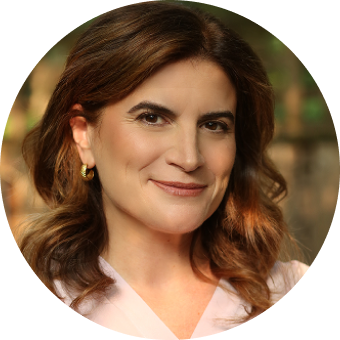
Elisabeth Goodridge
Director, Content Editor & Writer
Elisabeth, who worked for decades as an editor and journalist, now leads partner storytelling at Expedia Group as a Director, Content Editor & Writer. Formerly with The New York Times, the Boston Globe, and other news organizations, she brings years of award-winning expertise in travel coverage and audience-first content.
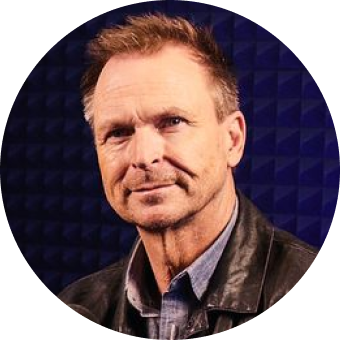
Phil Keoghan
TV host and Executive Producer
Phil is the Emmy-winning host of “The Amazing Race.” After a near-death experience at 19, he created his “Tick It Before You Kick It” philosophy, which he turned into a bestselling book called “No Opportunity Wasted.” Phil has visited over 100 countries, arguably making him the most traveled host on the planet.
Where to listen





Was this page helpful?
Tell us how we did so we can improve our site.